
Search Virginia Property Records
Virginia property records are public documents kept by circuit court clerks across the state's 95 counties and 38 independent cities. These records cover deeds, deeds of trust, liens, plats, and other legal instruments tied to real estate. Most circuit courts now offer some form of online access, and all accept in-person and mail requests. To find a property record, you go to the court in the county or city where the property sits. This guide walks you through where to look, what you will find, and how to get copies of the documents you need.
Virginia Property Records Overview
Where Virginia Property Records Are Kept
Circuit court clerks are the official keepers of land records in Virginia. The legal basis for this goes back to § 55.1-600 of the Code of Virginia, which establishes circuit courts as the required recording offices for any writing affecting real property in the state. When a deed, deed of trust, lien, plat, or other property instrument is acknowledged and submitted, it gets recorded at the circuit court in the county or city where the land is located. The clerk's office indexes and maintains all of these documents as part of the permanent public record.
Virginia has 95 counties and 38 independent cities, and each one has its own circuit court. The clerk of that court is your starting point for any property records search. Hours, online access, and copy fees differ from one court to the next. The Virginia Judicial System at vacourts.gov lists contact details and links for every circuit court in the state, making it easy to find the right office for any locality.
The Virginia courts homepage at vacourts.gov connects you to circuit court clerks statewide, where all land records and property documents are officially maintained.
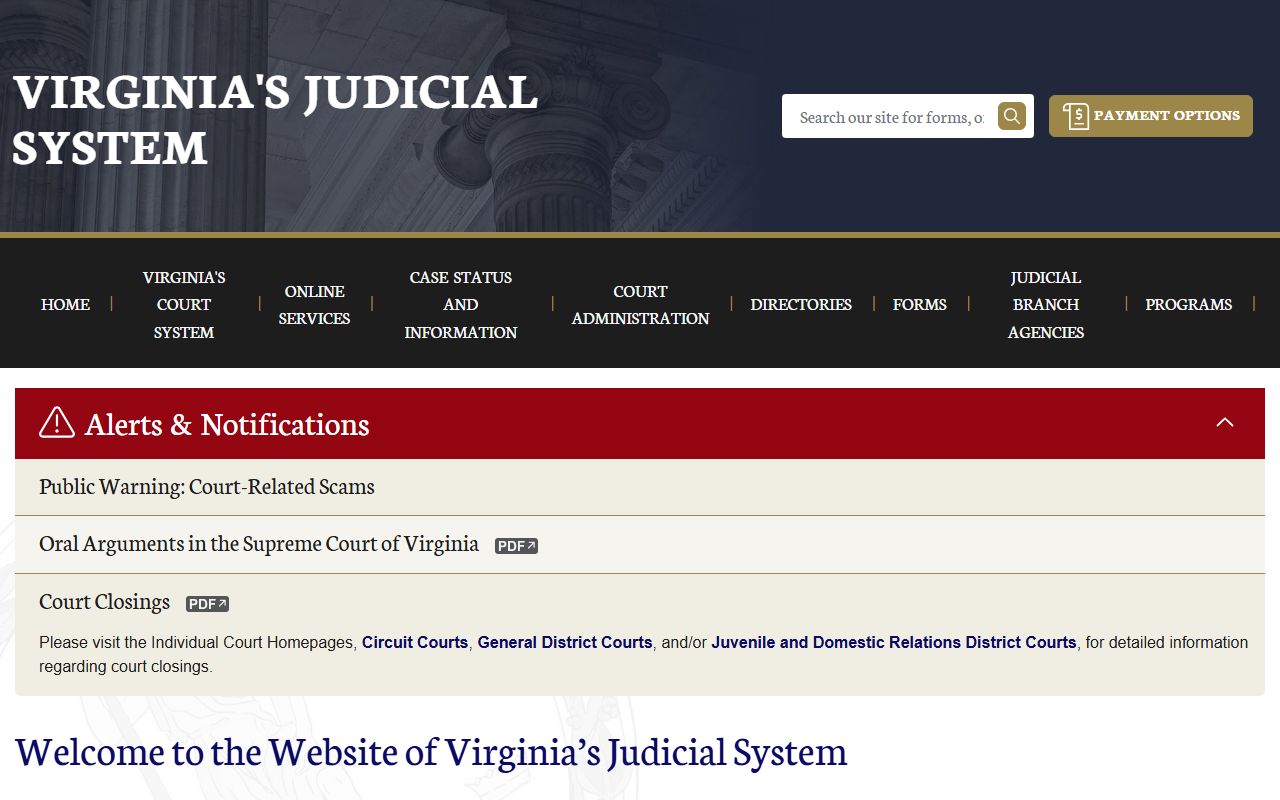
Use vacourts.gov to find a clerk's address, phone number, and online search tools for any Virginia county or city circuit court.
Land records in many Virginia counties go back centuries. Clerks index documents by grantor and grantee name, which allows you to trace ownership through a chain of title by searching successive records. Some courts also offer parcel-based search tools through GIS systems. At minimum, you usually need a property address or owner name to start a search.
Note: Land records at Virginia circuit courts cover real property only. UCC filings and federal tax lien notices on personal property are filed with the State Corporation Commission, not local courts.
How to Search Virginia Property Records
Online access is the fastest way to start a search. Virginia does not have a single statewide portal for all land records, but many circuit courts provide their own online search tools. Some use the Virginia Secure Remote Access (SRA) system run by the Office of the Executive Secretary. Others use third-party platforms like Concise Systems, WebGIS, or ArcGIS. Several major counties have built custom portals tied to their GIS mapping systems.
The Fairfax Circuit Court's Land Records FAQ is a detailed guide to the procedures at one of Virginia's busiest recording offices, and many of the same rules apply statewide.
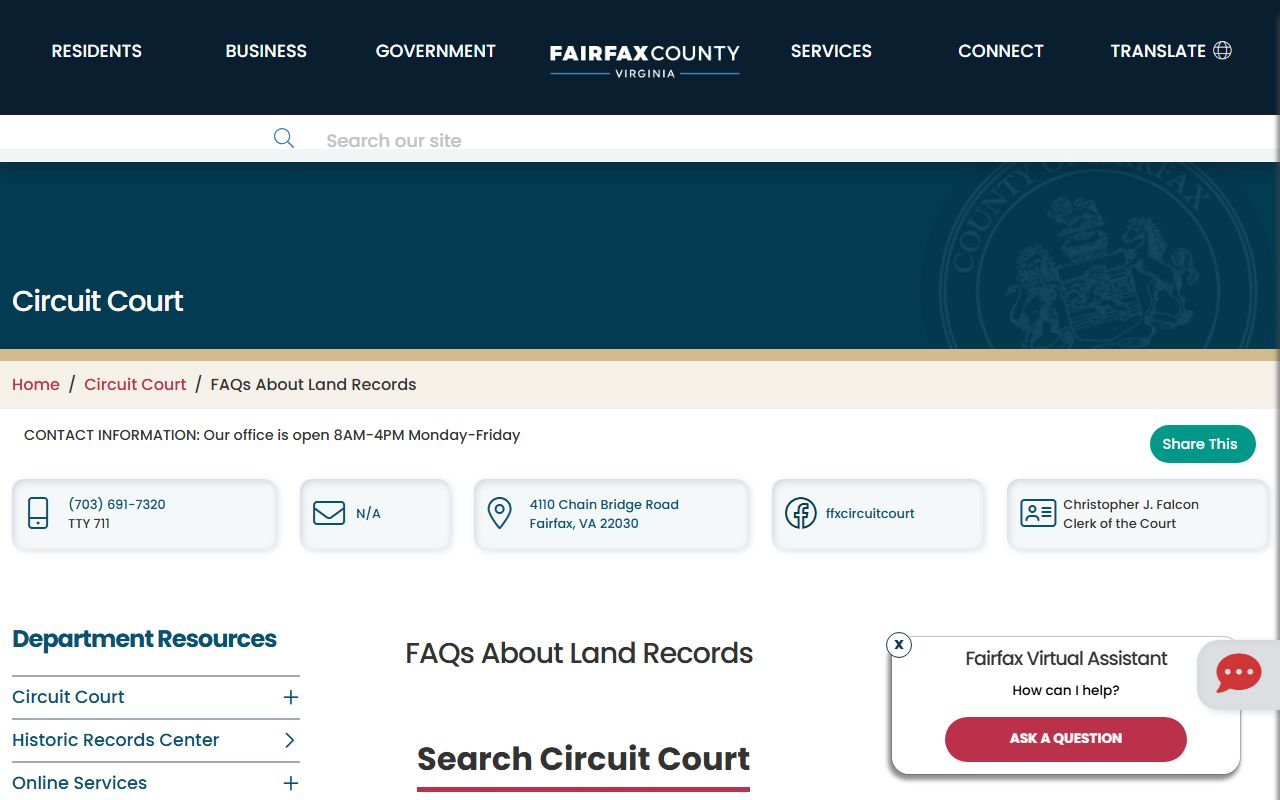
Similar submission methods, fees, and return timelines apply at most Virginia circuit courts, though exact details vary by locality so always confirm with the specific court first.
To search in person, visit the circuit court clerk's office in the county or city where the property is located. Bring the address, owner name, or parcel number. Staff can point you to the right index or computer terminal but typically cannot conduct the search for you. Certified copies can be made while you wait. Plain copies cost less and work for most non-legal purposes.
Mail requests are accepted at most courts. Send a written request with the property details, a check or money order for fees, and a return envelope. Response times vary by court. In-person visits are faster for time-sensitive requests.
Types of Virginia Property Records
Virginia land records cover a broad range of documents tied to real estate. Each one is recorded at the circuit court in the county or city where the property sits. Deeds are the most common. A warranty deed, special warranty deed, or quitclaim deed transfers ownership from one party to another. Deeds of trust secure a loan against real property. When the loan is paid in full, the lender records a Certificate of Satisfaction to release the lien from the property.
Virginia Code § 55.1-606 sets the physical and format standards that documents must meet before a circuit court clerk will accept them for recording.
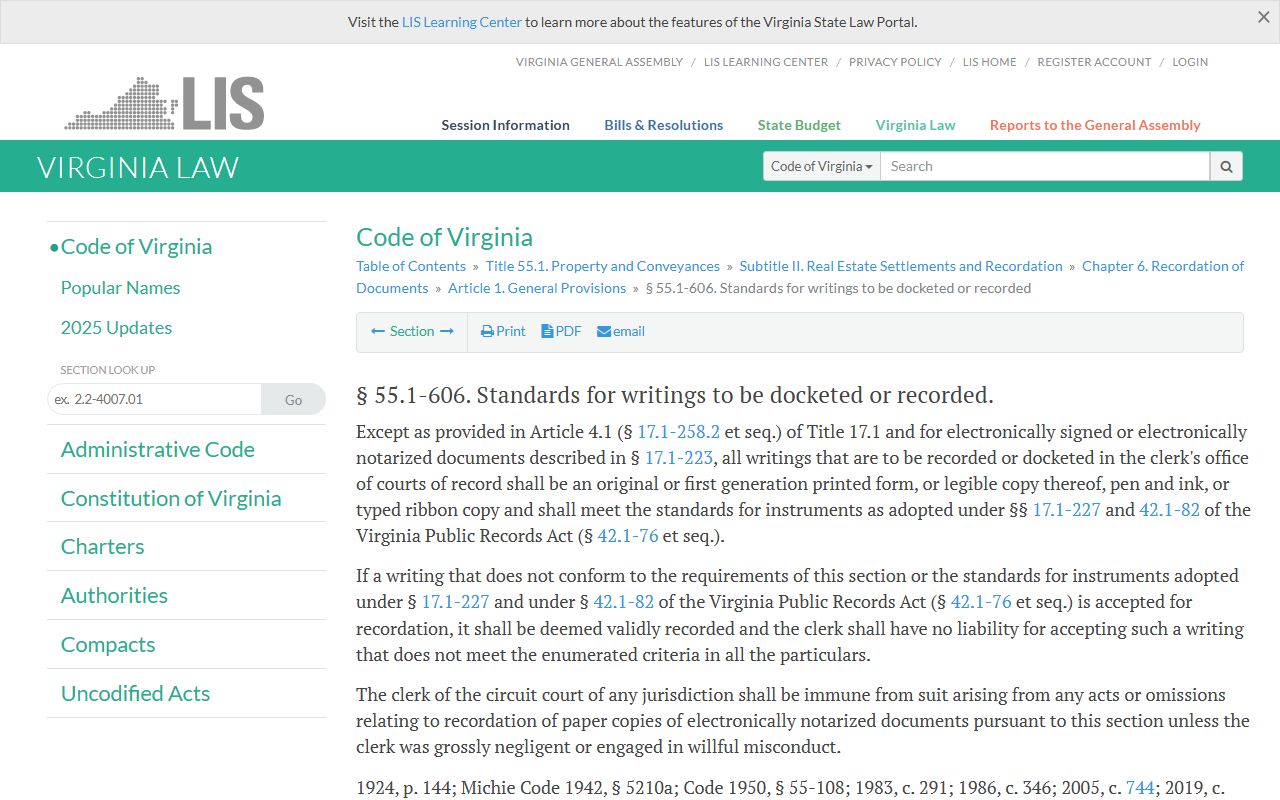
Clerks can refuse documents that do not meet format standards, though a non-conforming document that is accepted is still considered validly recorded under Virginia law.
Other documents commonly found in Virginia land records include mechanic's liens and judgment liens, plats and subdivision maps showing lot boundaries, easements and rights-of-way, powers of attorney recorded for real estate transactions, and corrective affidavits for description errors in previously recorded deeds.
- Warranty deeds, special warranty deeds, and quitclaim deeds
- Deeds of trust and mortgages
- Certificates of Satisfaction releasing paid liens
- Mechanic's liens and judgment liens on real property
- Plats, subdivision maps, and boundary surveys
- Easements and rights-of-way affecting property use
- Corrective affidavits for obvious description errors
Virginia Property Recordation Laws
All property conveyances and recordation in Virginia fall under Title 55.1 of the Code of Virginia, titled Property and Conveyances. This title covers how property estates are created and limited, format requirements for recorded documents, and rules that protect people who buy property in good faith from fraudulent transfers. It is the master statute for all real estate transactions in the Commonwealth.
Title 55.1 of the Virginia Code is the master statute covering all property records, deeds, conveyances, and real estate transactions in the Commonwealth.
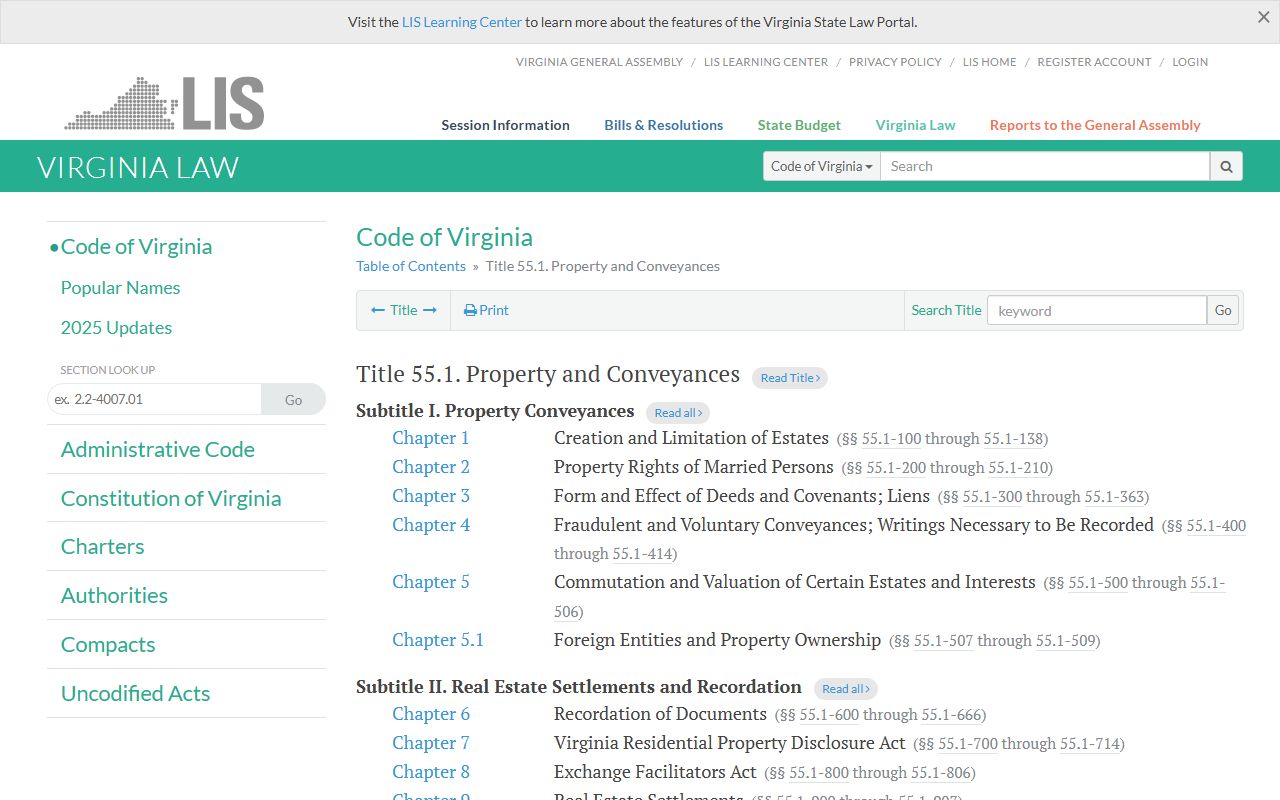
The full text of Title 55.1 is freely available and searchable at law.lis.virginia.gov, organized by chapter and section number for easy reference.
Chapter 6 of Title 55.1 governs recordation specifically. It sets out when and where documents must be recorded, how acknowledgments must be taken, and the rules for electronic recording. Article 8 of Chapter 6 adopted the Uniform Real Property Electronic Recording Act, allowing Virginia circuit courts to accept electronically filed and notarized land records. Chapter 6 was significantly updated in 2019 to reflect modern recording practices.
Chapter 6 of Title 55.1 is the comprehensive recordation statute that circuit court clerks follow when accepting and processing property documents statewide.
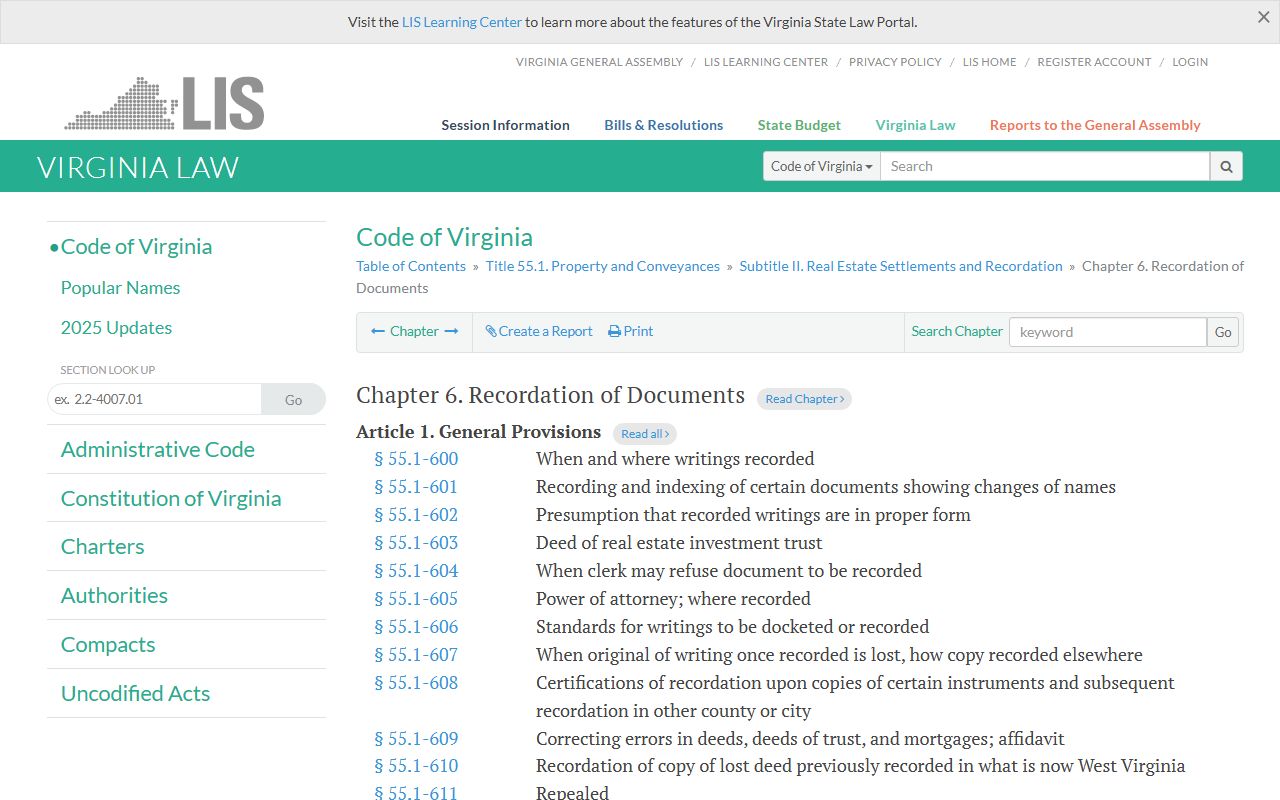
It covers document format standards, acknowledgment requirements, federal lien registration procedures, and electronic recording provisions that apply across all Virginia localities.
Section 55.1-609 provides a formal way to correct obvious description errors in recorded deeds and deeds of trust. The correction is made by recording a corrective affidavit after notifying all parties and allowing 30 days for any objection. When properly done, the correction relates back to the original recording date. An "obvious description error" under this statute includes transcription mistakes in lot numbers, metes and bounds, and plat references.
Section 55.1-400 voids any conveyance made to delay, hinder, or defraud creditors or purchasers. A buyer who had no notice of fraudulent intent keeps the title and is protected under this section.
Section 55.1-400 of the Virginia Code protects bona fide purchasers from fraudulent property transfers by voiding conveyances made with intent to defraud creditors or buyers.
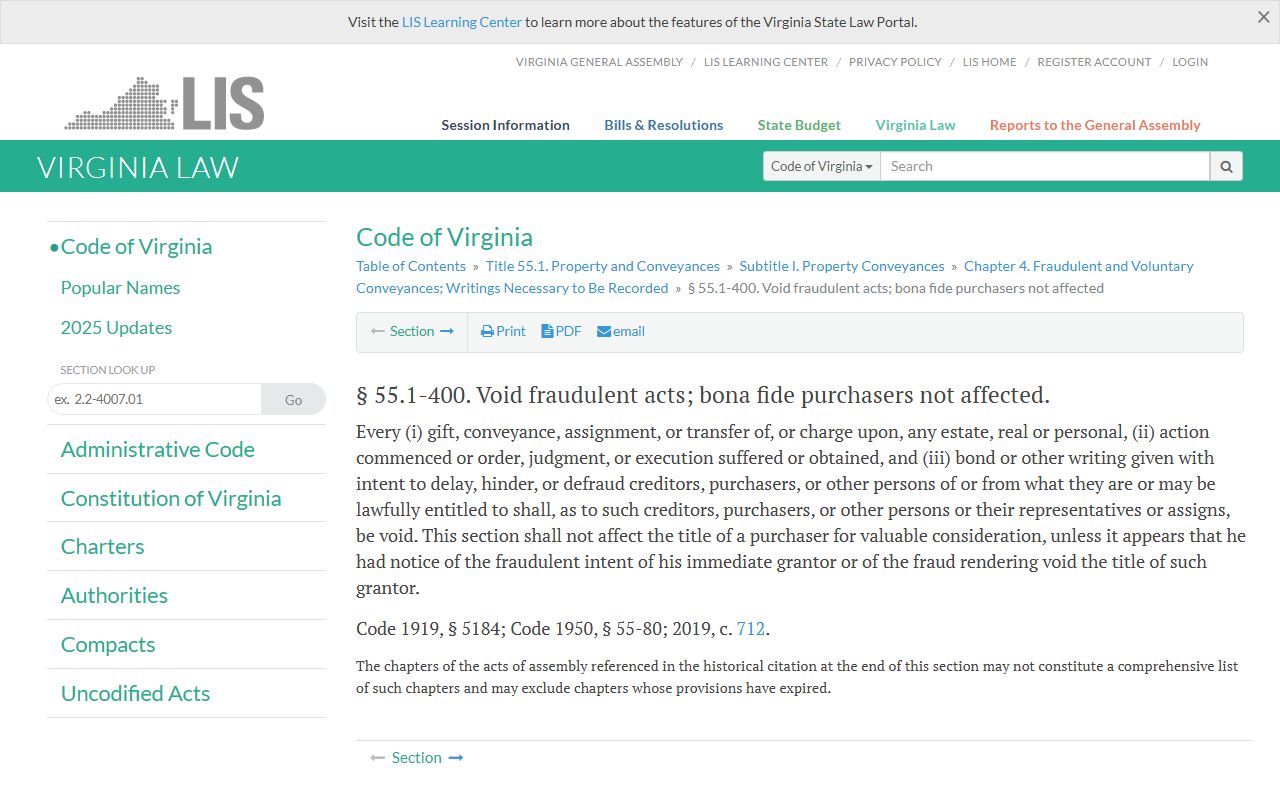
Any transfer made to hinder or defraud creditors or purchasers can be challenged in court under this statute, giving innocent buyers a clear legal remedy.
Virginia Property Disclosure Requirements
The Virginia Residential Property Disclosure Act, found at §§ 55.1-700 through 55.1-714 of the Code of Virginia, sets what sellers must disclose when selling residential real property. The Virginia Department of Professional and Occupational Regulation (DPOR) oversees this act and maintains the official disclosure summary online. The act covers most residential real property sales, with some exceptions listed in § 55.1-702.
The Virginia DPOR at dpor.virginia.gov hosts the official summary of residential property disclosure requirements, covering every category sellers must address before closing on a home sale.
Buyers can review all required disclosure categories at dpor.virginia.gov before settling on any residential property purchase in Virginia.
The act takes an "as is" approach. Sellers make no warranties about property condition, lot lines, or adjacent parcels. Instead, they must disclose specific categories and advise buyers to do their own inspections and due diligence. Required disclosures cover property condition, lot line disputes, adjacent parcel issues, historic district ordinances, Chesapeake Bay resource protection areas, special flood hazard areas, and military air installation noise zones. Sections 55.1-706.1 and 55.1-708 add disclosures for properties with Lis Pendens filings and properties previously used to produce methamphetamine.
UCC Filings and Federal Tax Liens in Virginia
Personal property security interests and federal tax liens in Virginia are filed with the Virginia State Corporation Commission, not with local circuit courts. The SCC is the central filing office for UCC financing statements and federal tax lien notices statewide. Real property liens like mechanic's liens and judgment liens go to the circuit court. But UCC liens on personal property go to the SCC's Clerk's Information System.
The SCC maintains Virginia's central UCC filing system. All UCC submissions must be made online through the Clerk's Information System, and paper filings are returned unprocessed.
You can search existing UCC filings at the SCC by debtor name or file number, and PDF images of documents filed since October 2003 are available through the online system.
The SCC Clerk's Office provides in-person service from 8:30 to 10:30 a.m. on weekdays at 1300 East Main Street in Richmond. Documents can also be dropped off at the first-floor security desk between 8:15 a.m. and 5:00 p.m. Monday through Friday. Reach the SCC by phone at (804) 371-9733 or by email at sccefile@scc.virginia.gov for questions about UCC and federal lien records.
The SCC Clerk's Office page at scc.virginia.gov describes in-person service hours, document drop-off procedures, and all contact information for business and UCC filings.
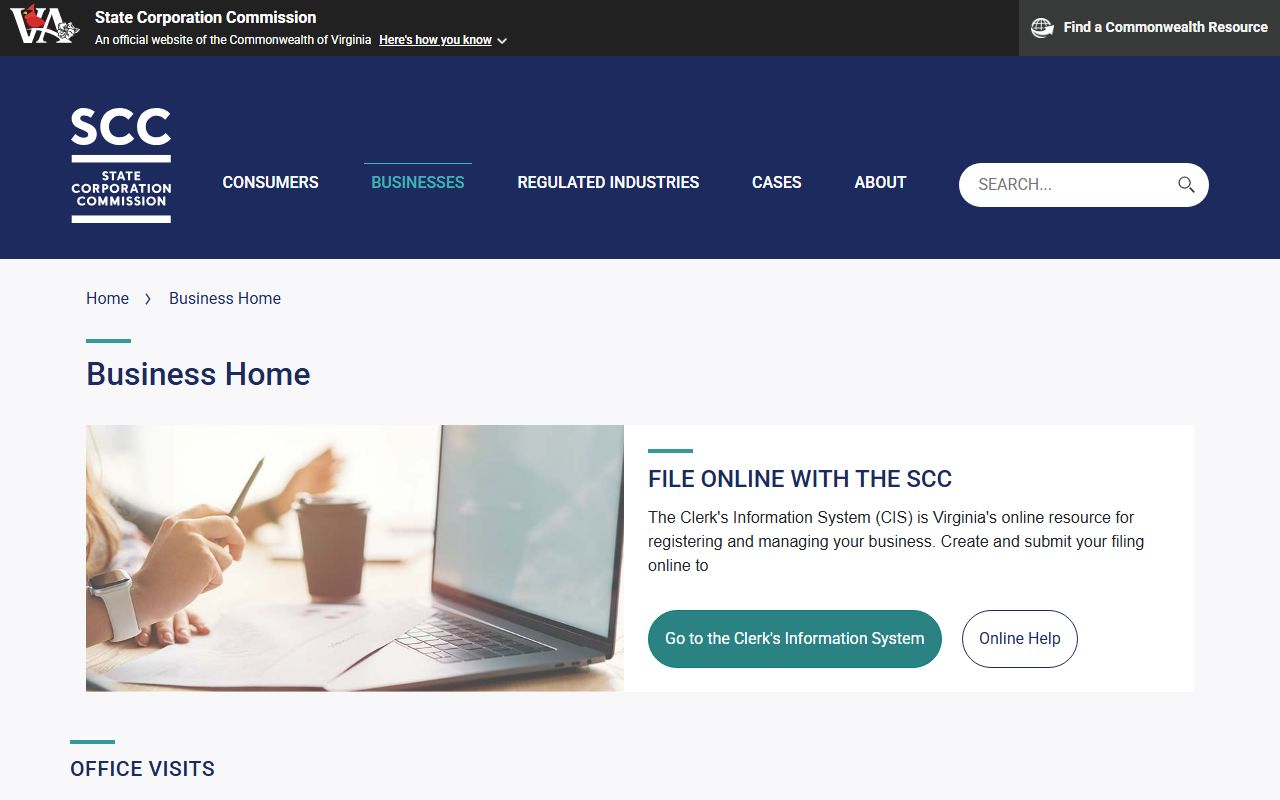
For most UCC filings, the online system is faster and more efficient than visiting the office directly.
Historic Land Records in Virginia
The Library of Virginia maintains the Chancery Records Index (CRI), a major digital collection of historic equity court cases from Virginia circuit courts. These records are useful for tracing property ownership going back well before modern deed indexes. Chancery causes are equity cases decided by a judge rather than a jury, and they often involved land boundary disputes, estate administration, debt collection, and property partition suits. Many valuable ownership details surface in these records that do not appear in deed books alone.
The Library of Virginia's Chancery Records Index at lva.virginia.gov provides free digital access to historic land-related court records from over 100 Virginia localities.
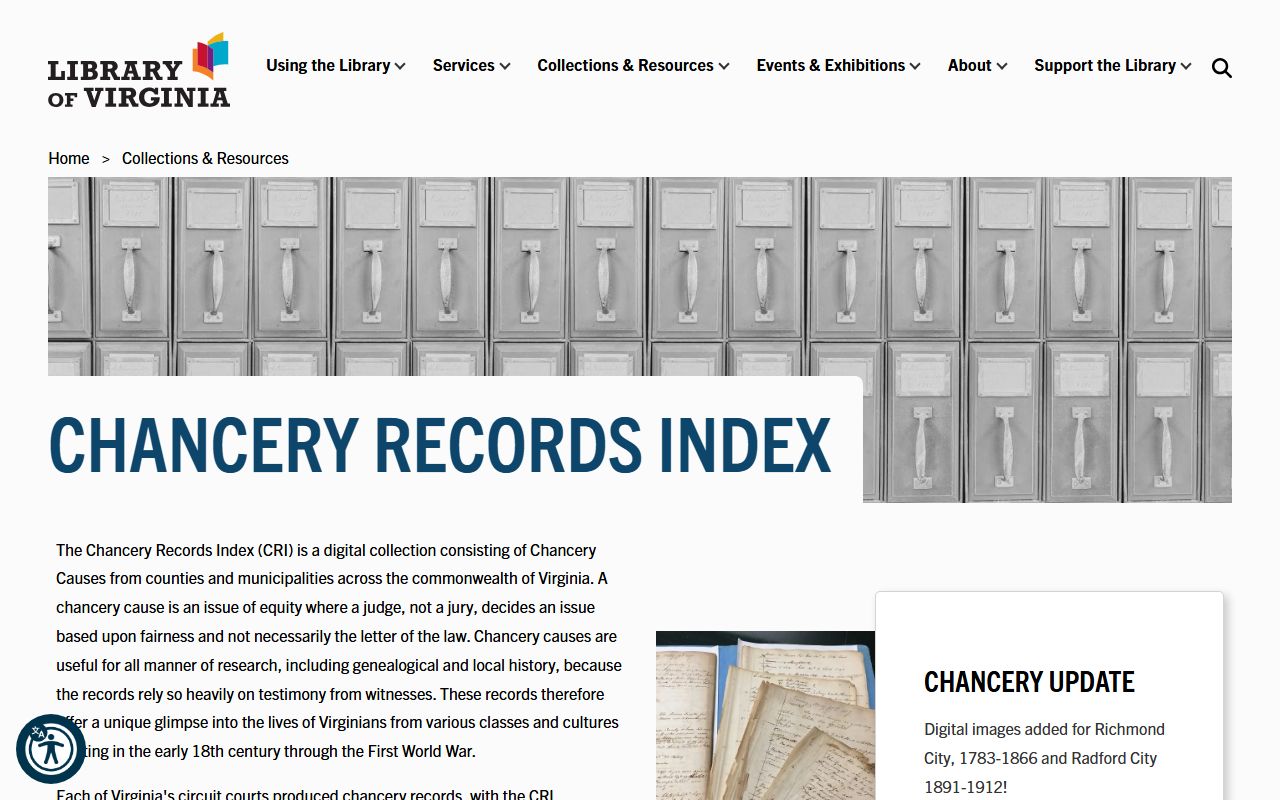
The CRI is especially useful for genealogical research and tracing ownership chains in older properties, with current digitization efforts focused primarily on pre-1913 cases.
The CRI contains scanned images or indexed information from more than 100 of Virginia's 133 localities. The Library provides an interactive map showing which localities have active, completed, or in-process records. Some materials are temporarily unavailable due to active conservation or digitization work. Use the Map Filter "Active Status" on the CRI page to see current availability.
Property Assessment Records in Virginia
Real estate in Virginia is assessed for local taxation under § 58.1-3200 of the Code of Virginia. Assessment records are separate from the land records kept by circuit court clerks. While deeds and liens go to the circuit court, assessed values and tax data are managed by the Commissioner of the Revenue in each county or the City Assessor in each independent city. These two sets of records complement each other but come from different offices.
Code § 58.1-3200 at law.lis.virginia.gov establishes the legal authority for local real estate taxation across all Virginia counties and independent cities.
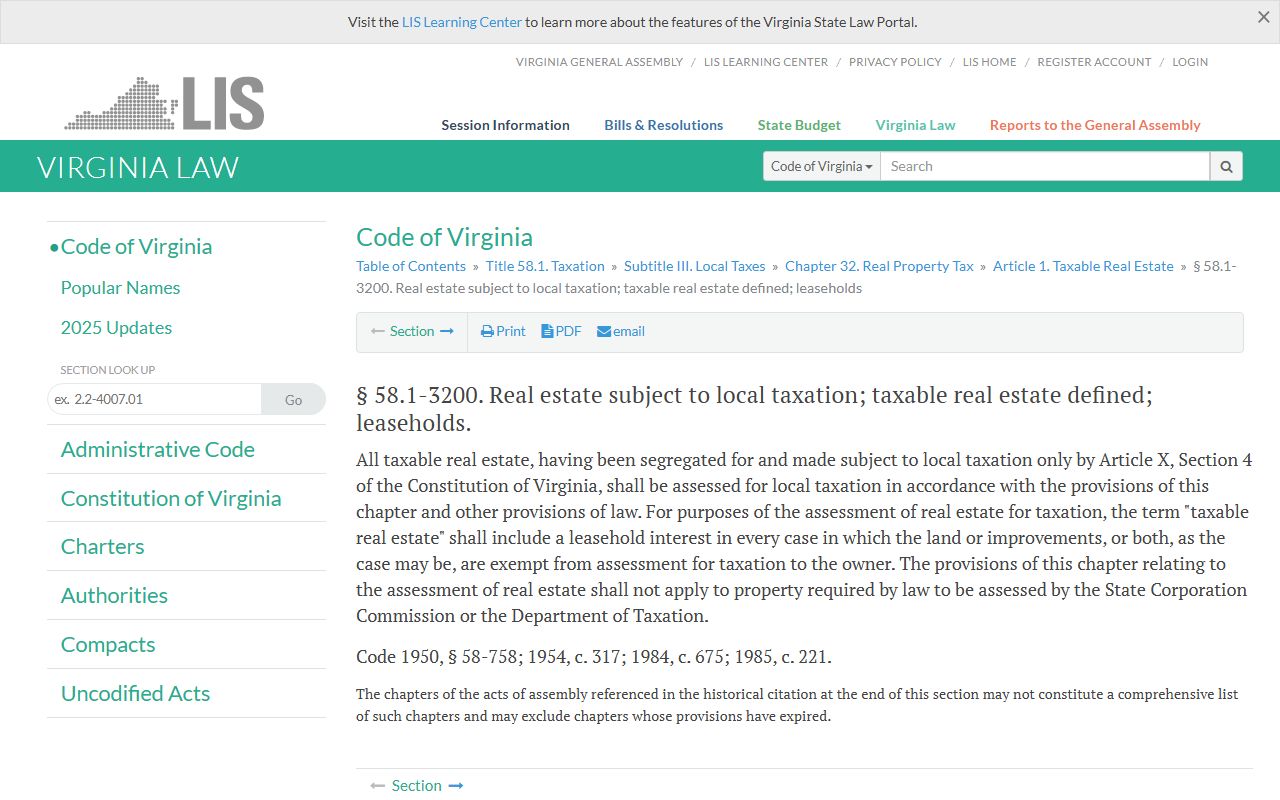
Each locality sets its own tax rate within the framework established by state law, which is why assessed values and rates vary across Virginia counties and cities.
Assessment records show the assessed value of land and improvements, the owner of record, and the tax parcel number. Many localities provide online lookup tools, often connected to GIS mapping systems. These tools are useful for confirming ownership and assessed value but are not substitutes for recorded deed records when researching title or encumbrances on a property.
How to Get Copies of Virginia Property Records
To get copies of recorded property documents, contact the circuit court clerk in the county or city where the property is located. In-person visits are the fastest option. Mail requests work too but take longer. Some courts are beginning to accept electronic requests, so check the specific court's website before you send anything.
The Fairfax Circuit Court's general information page covers submission methods, return timelines, and payment options at one of Virginia's largest land records divisions.
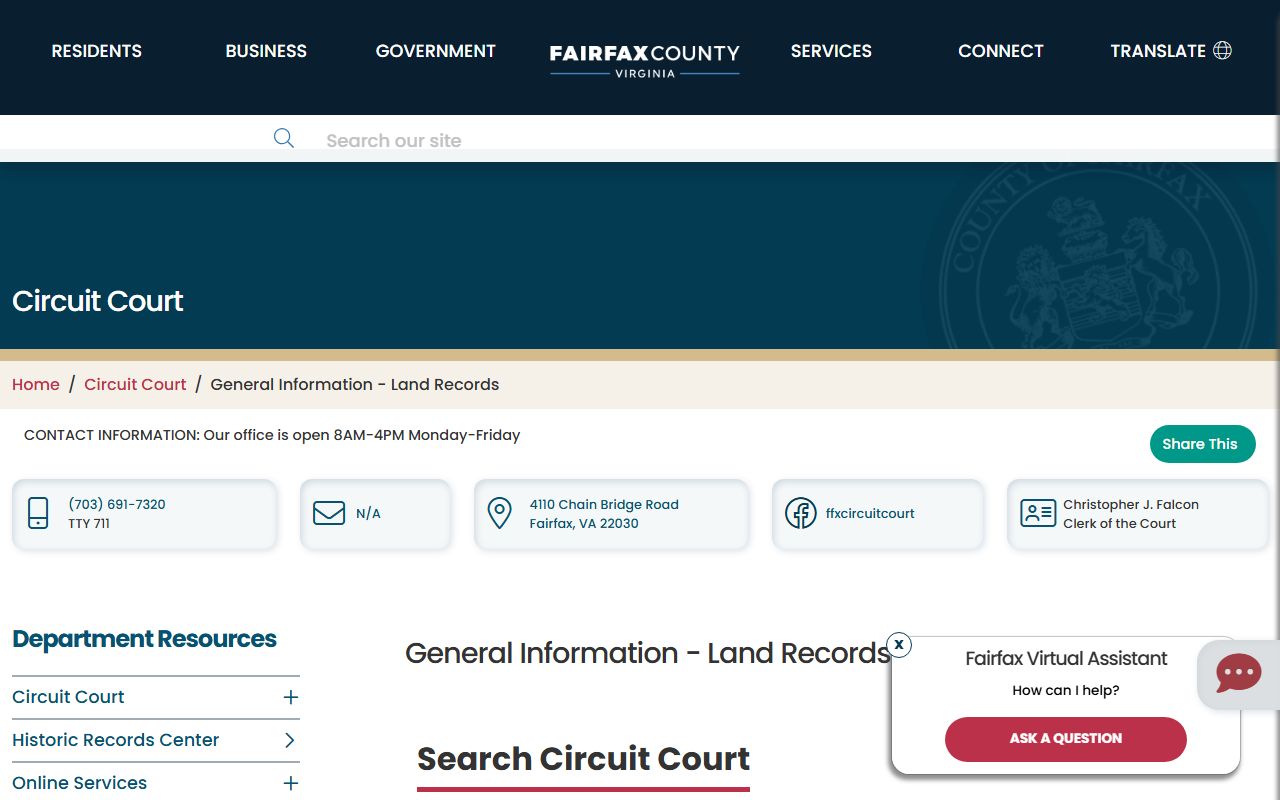
Most Virginia circuit courts follow similar procedures for copy requests, though fees and processing times differ from one locality to the next.
Copy fees vary by county. The Fairfax Circuit Court charges $0.50 per page for plain copies and $2.00 per certification. Mail requests can take 4 to 6 weeks from recording. In-person requests are usually processed the same day. Payment methods vary widely. Many courts accept cash, business checks, cashier's checks, money orders, and major credit cards. Personal checks are rarely accepted. Always contact the specific clerk's office to confirm current fees and payment options before visiting or mailing a request.
Certificates of Satisfaction, which confirm a mortgage has been paid off, receive priority handling. State law requires clerks to record them within 10 business days of receipt. If you need proof that a lien has been released, that document is one of the faster ones to locate and verify.
Nonresident Property Owners in Virginia
If you own or sell real property in Virginia but live outside the state, the Virginia Department of Taxation requires you to register. This applies to nonresident individuals, estates and trusts, partnerships, S corporations with nonresident shareholders, and foreign corporations that rent or sell Virginia real estate. Brokers and settlement agents also have their own obligations under this rule.
The Virginia Tax website at tax.virginia.gov explains the registration process for nonresident property owners who earn rental income from or sell Virginia real estate.
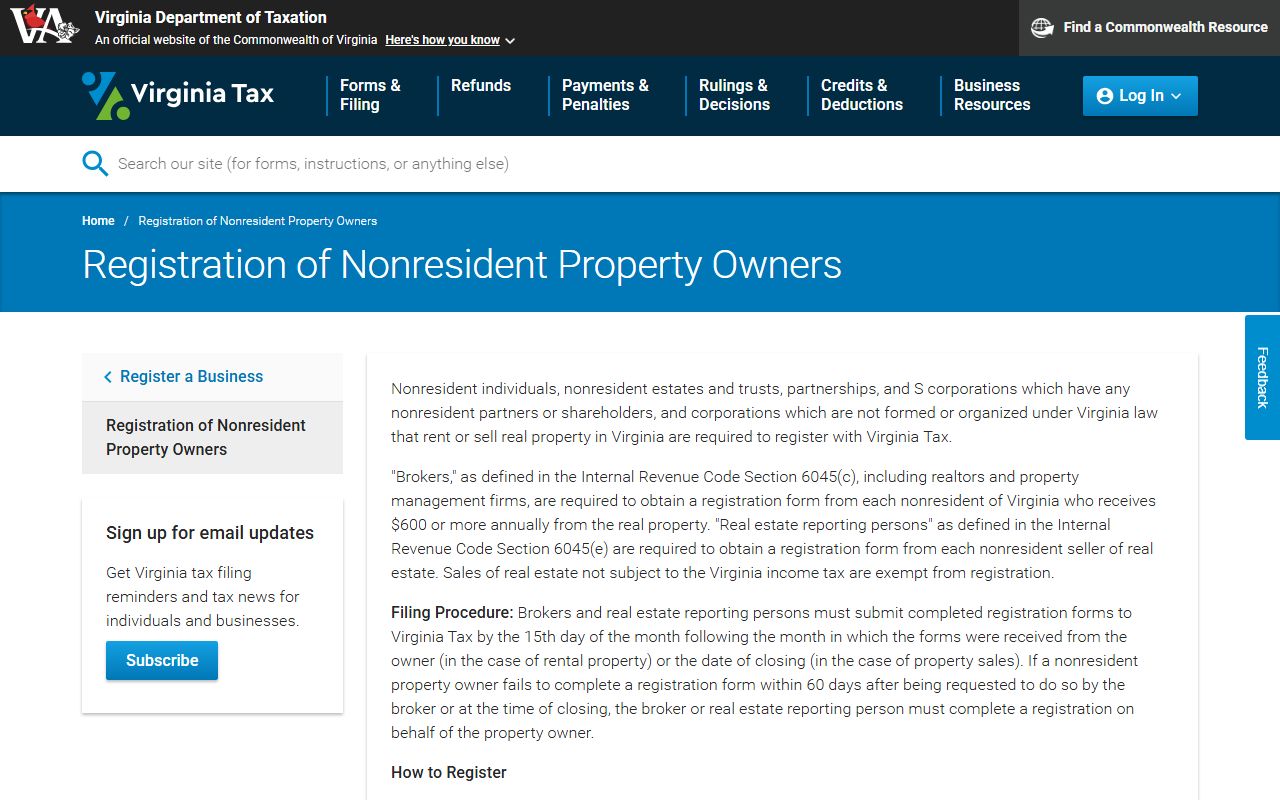
Brokers and settlement agents must collect and submit registration forms from nonresident owners and sellers on specific deadlines tied to income receipt or closing date.
Brokers managing rental property must obtain a registration form from each nonresident owner who receives $600 or more annually and submit it to Virginia Tax by the 15th of the month following receipt. Real estate settlement agents must obtain registration forms from nonresident sellers at closing. Sales not subject to Virginia income tax are exempt from registration. Failing to comply can result in penalties for both the property owner and the responsible broker or settlement agent.
Virginia Code § 55.1-600 is the foundational recording statute, establishing circuit court clerks as official recorders of property documents in the Commonwealth since 1919.
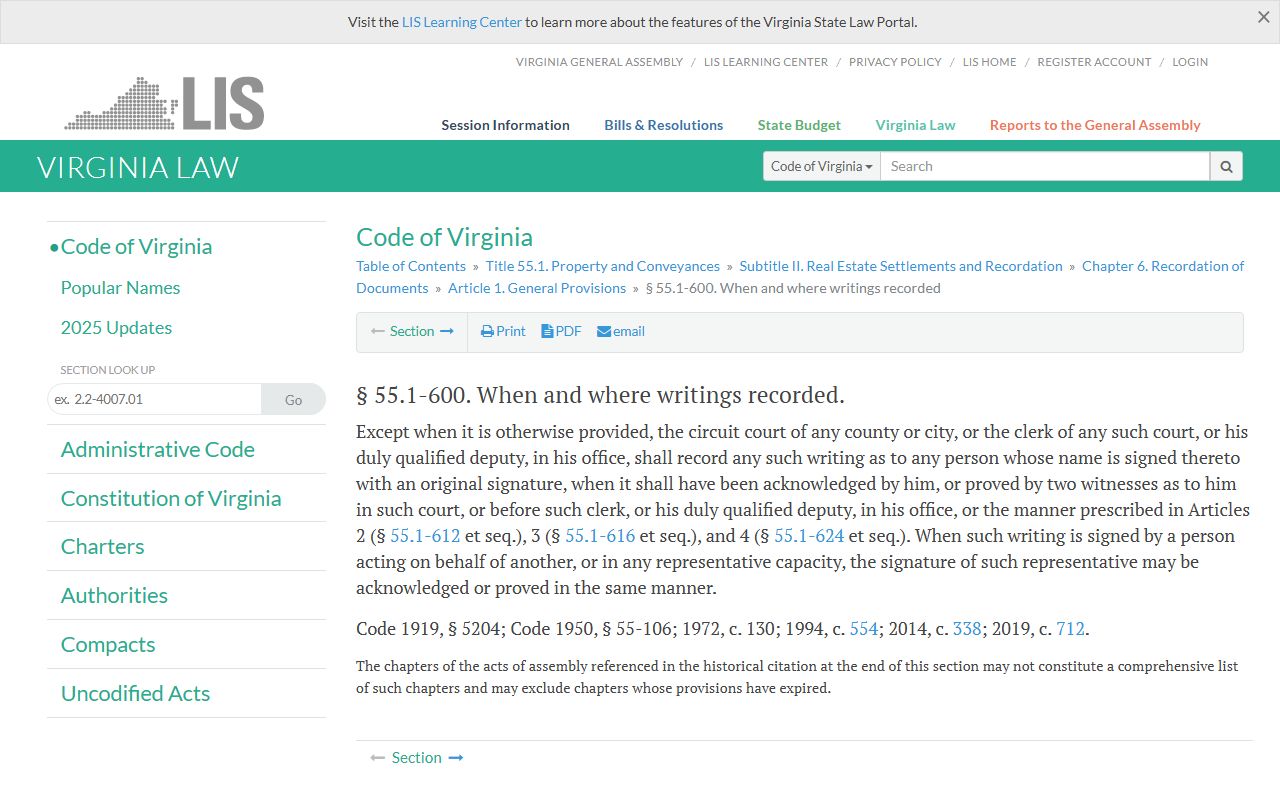
This foundational statute was last amended in 2019 and continues to form the legal basis for all property recordation in Virginia.
Section 55.1-609 of the Virginia Code provides a formal correction process for obvious description errors in recorded deeds, protecting all parties from costly re-recording when a simple mistake was made in the original instrument.
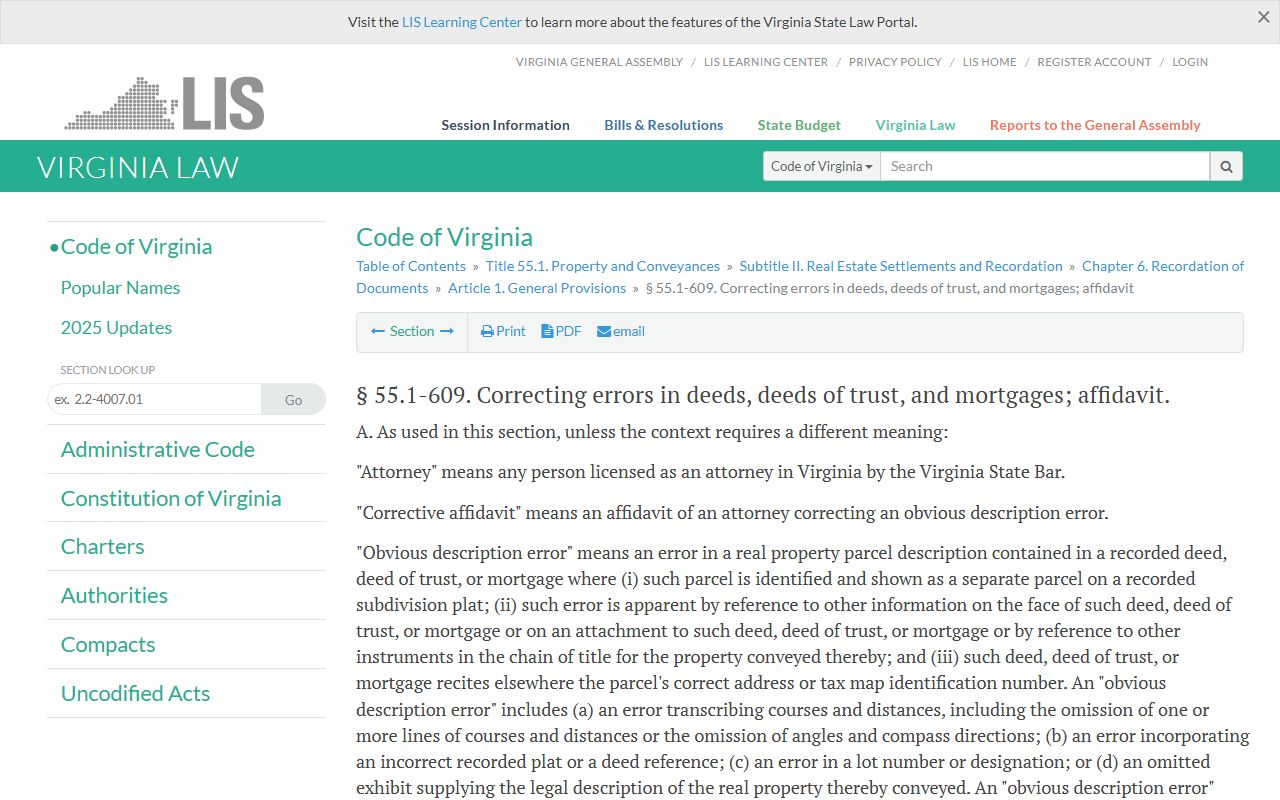
The corrective affidavit process requires notice to all parties and a 30-day objection window, after which the correction is filed and relates back to the original recording date.
Browse Virginia Property Records by County
Each of Virginia's 95 counties has a circuit court clerk who maintains the local land records. Select a county below to find contact information, online search tools, and resources for property records in that area.
Property Records in Major Virginia Cities
Virginia's independent cities each have their own circuit court that handles property records. Select a city below to find the right courthouse and search tools for that area.