
Fredericksburg Property Records
Fredericksburg property records are kept by the Circuit Court Clerk and the Department of Real Estate Assessments, both along Princess Anne Street. Fredericksburg is an independent Virginia city with its own circuit court, separate from Stafford and Spotsylvania counties that surround it. The clerk records deeds, deeds of trust, plats, liens, and all other land instruments for real estate within city limits. These records are public. You can search online through the Virginia courts system or the city's assessment portal, visit the clerk in person, or send a written request by mail for copies of recorded documents.
Fredericksburg Property Records
Fredericksburg Circuit Court - Deed Recording
The Fredericksburg Circuit Court Clerk records all instruments affecting real property title within city limits. This covers deeds, deeds of trust, certificates of satisfaction, judgment liens, easements, subdivision plats, and financing statements. Under Title 55.1 of the Virginia Code, a deed must be recorded to be binding on third parties. The clerk creates a permanent public record of each instrument when it is filed, indexed by both grantor and grantee name.
The clerk's office is at 900 Princess Anne Street, Fredericksburg, VA 22401. Phone: (540) 372-1179. Hours: Monday through Friday, 8:00 a.m. to 4:00 p.m. The clerk is a constitutional officer elected to eight-year terms. In addition to land records, the office manages probate, marriage licenses, and all civil and criminal court records.
Fredericksburg is an independent city, fully separate from the surrounding Spotsylvania County and Stafford County. Property inside city limits must be recorded here. If a parcel straddles or sits close to the city boundary, confirm with the assessor's office which jurisdiction it falls in before you record the deed.
Real Estate Assessments
The Department of Real Estate Assessments sets the taxable value of all real property in Fredericksburg every year. Values are established as of January 1 based on analysis of comparable sales and property characteristics. Tax bills go out twice a year, with due dates on June 5 and December 5.
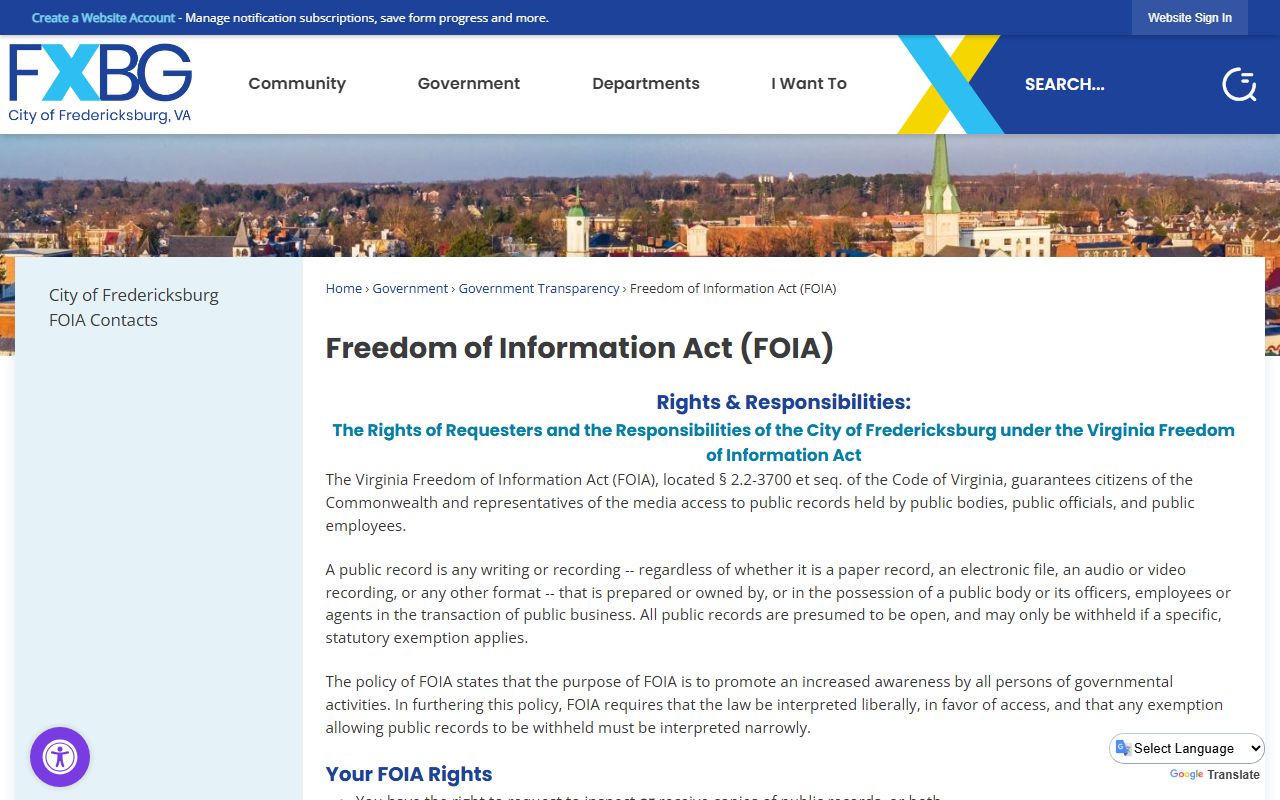
The screenshot above shows the Fredericksburg Real Estate Assessments portal, where you can search property values and view details online.
Assessment records are open to the public. Each record shows the owner of record, the parcel number, lot size, improvement descriptions, and assessed values for land and buildings separately. If you want to check whether a parcel's assessed value is in line with recent sales in the area, assessment data is a good starting point for comparison.
Tax relief programs are available for elderly and disabled homeowners and for qualified disabled veterans. Contact the Department of Real Estate Assessments at 715 Princess Anne Street, Fredericksburg, VA 22401, phone (540) 372-1177, for details on eligibility and deadlines.
GIS Maps and Online Search Tools
The City of Fredericksburg GIS Division provides interactive mapping for property research. Search by address, parcel number, or owner name and view map layers for zoning, floodplains, historic districts, and aerial imagery. The GIS data is updated in coordination with the Department of Real Estate Assessments.
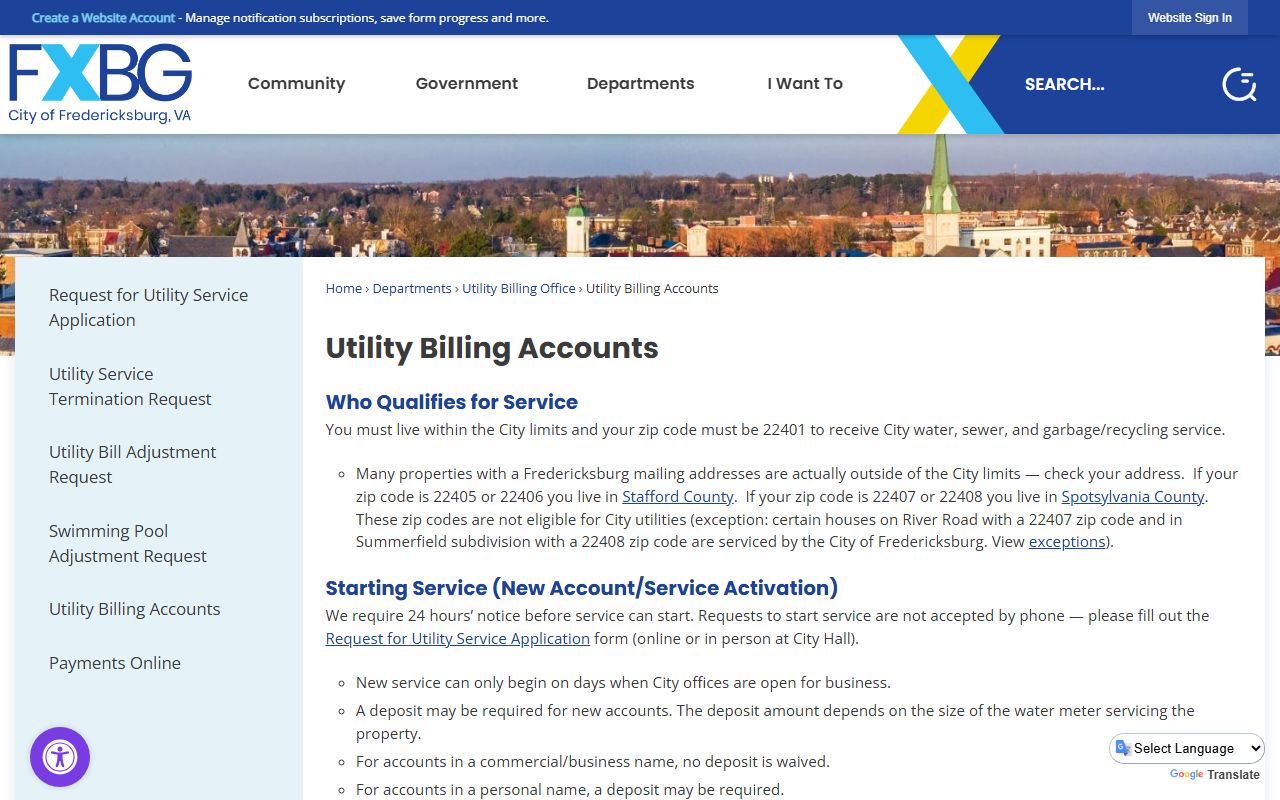
The image above shows the Fredericksburg GIS portal, offering both web-based mapping and downloadable datasets for public use.
GIS tools are useful for a first look at a property's location, zoning, and nearby land uses. They do not replace a formal title search or a licensed survey. For accurate parcel boundaries, a licensed surveyor must set the stakes. For a clean title, a professional title search is required.
Real Estate Tax Payments
Real estate taxes in Fredericksburg are due June 5 and December 5 each year. The City Treasurer's Office handles all tax collection. You can pay online, by mail, or in person at 715 Princess Anne Street, Fredericksburg, VA 22401. Phone: (540) 372-1178.
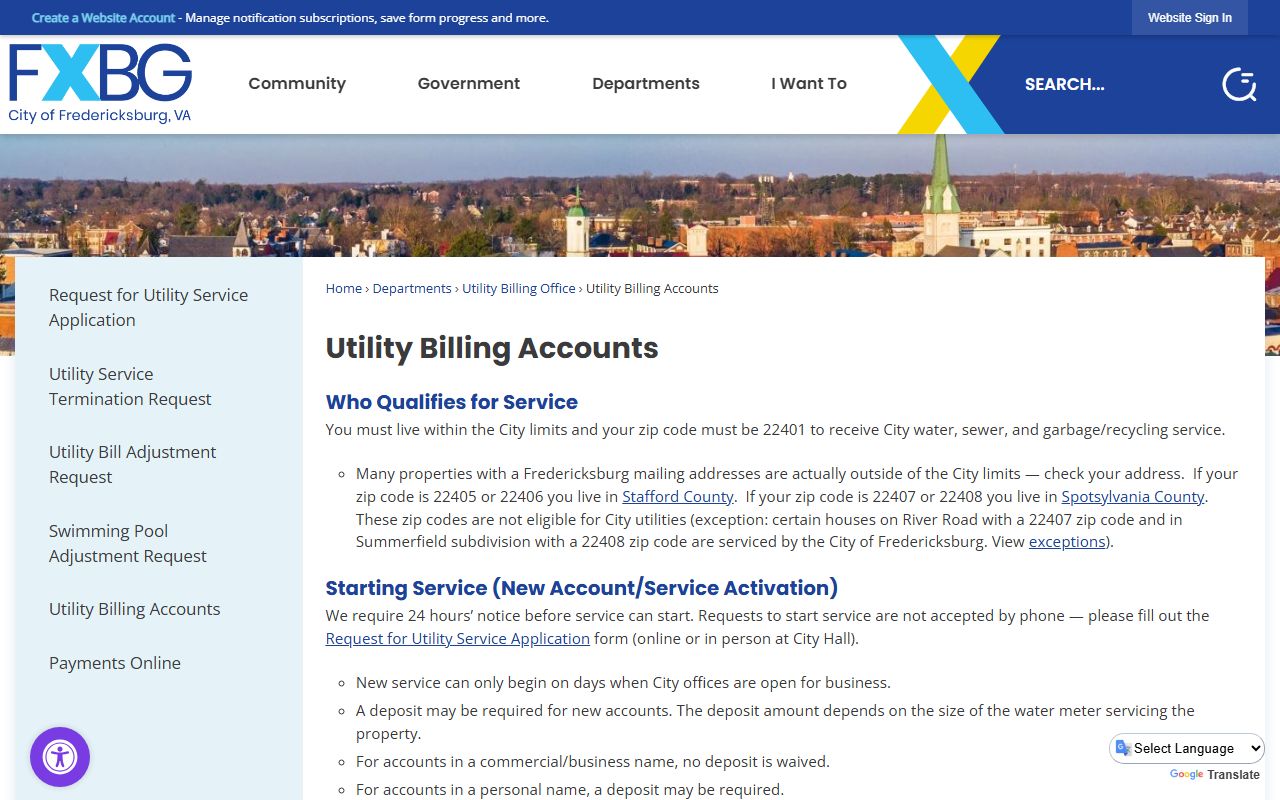
The screenshot above shows the Fredericksburg Treasurer's tax portal, where you can pay real estate taxes and look up account balances online.
Personal property taxes are due June 5 each year. If you have questions about what you owe or need to resolve a delinquency, the treasurer's office is the right contact. Keep all payment confirmations. Tax receipts matter during real estate transactions.
Unpaid real estate taxes accrue interest and penalties. Extended delinquency can lead the city to file a tax lien in circuit court. That lien becomes part of the public record and shows up in title searches. It must be paid off before a sale or refinance can close.
How to Search Fredericksburg Property Records
Fredericksburg has online tools for assessment and tax data, which makes starting your research easy. For recorded deed and lien searches, you need to go through the Circuit Court Clerk's land records index. The clerk indexes by grantor and grantee under Virginia Code § 55.1-600.
To trace a chain of title, start with the current owner as grantee, find the deed that conveyed the property to them, then look up the prior owner as grantee, and so on back through the years. Also check the grantor index for any deeds out from each owner that might have conveyed easements or other rights.
In-person searches are available at the clerk's office at 900 Princess Anne Street during business hours. Staff can help you find the right indexes and deed books. Copies of instruments are available for a fee set by state statute. Certified copies cost a bit more.
The city's online search and GIS tools let you handle the assessment and tax portions of your research without a visit. Third-party directories also list Fredericksburg's contact information and confirm that both GIS search and online tax payment are available.
Virginia Recording Law and Independent City Status
Fredericksburg is an independent city under Virginia law. It operates its own government and court system, separate from the surrounding counties. Property inside the city is taxed only by the city; property in the surrounding counties is taxed by those counties. The two systems do not share records.
Title 55.1 of the Virginia Code governs all property recording statewide. It sets requirements for deeds, acknowledgments, recording fees, and the priority rules that apply when two parties claim the same property. Virginia uses a race-notice system: the first to record without notice of a prior unrecorded claim wins priority.
The Virginia Freedom of Information Act makes most property records public. Deeds, assessments, and tax records are open for anyone to view and copy. Some narrow exceptions apply, but the core land records system is fully public. If you believe you have been improperly denied access to a record, you can appeal under FOIA procedures.